
Last updated November 14, 2026
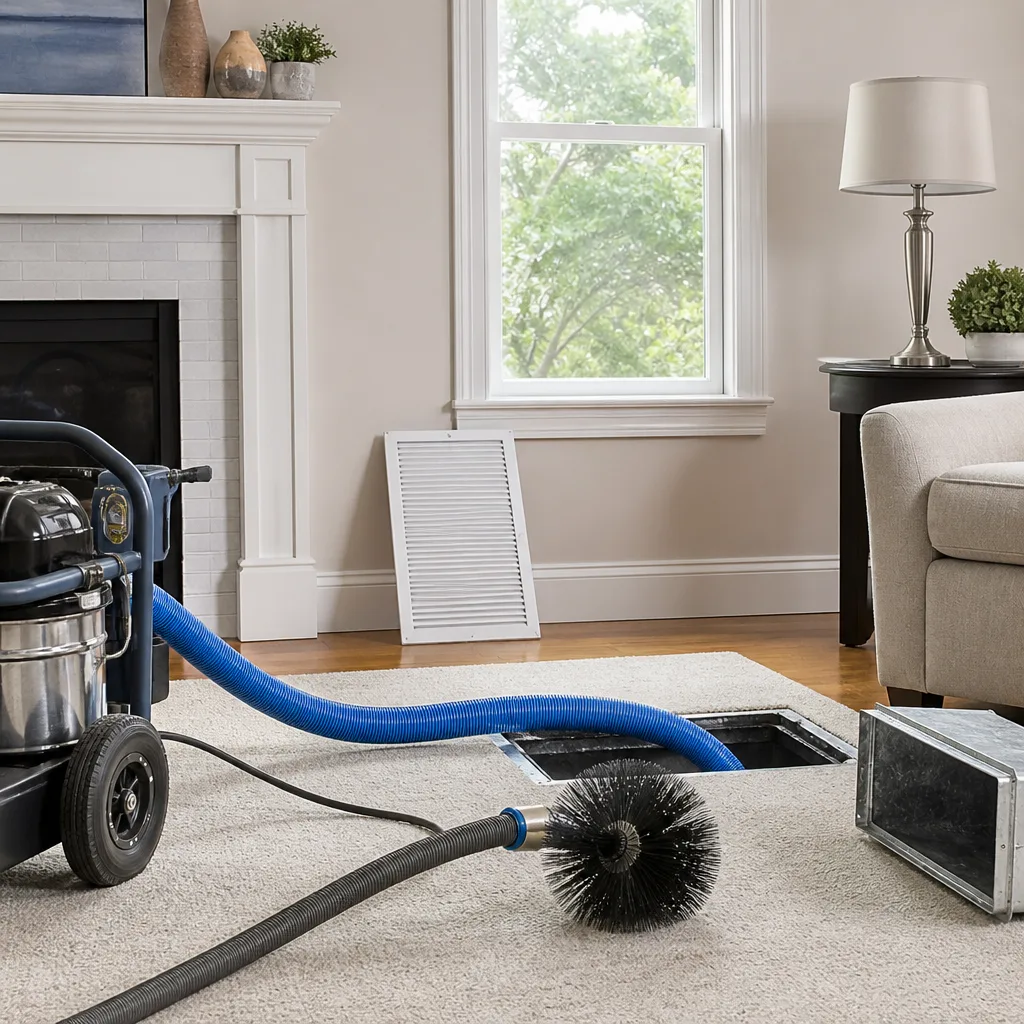 Whole-home duct cleaning
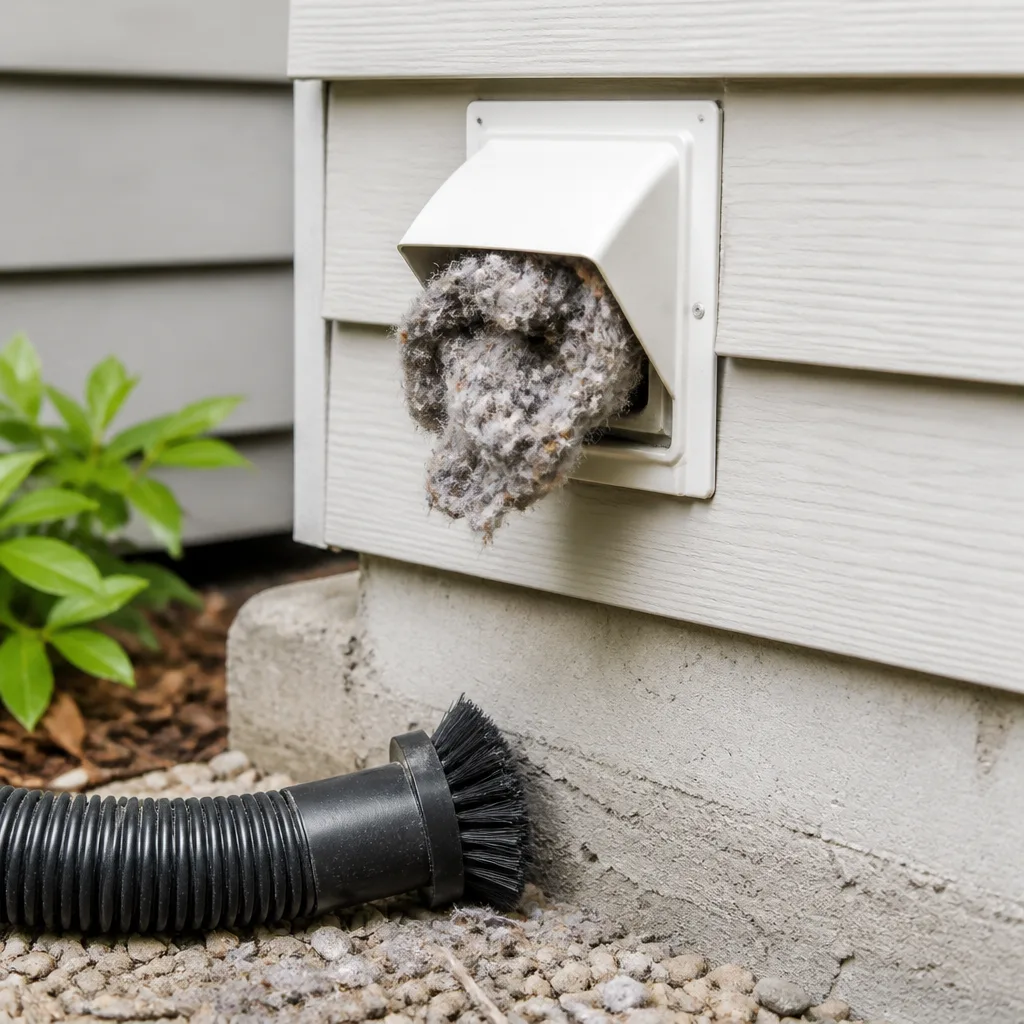 Dryer vent cleaning
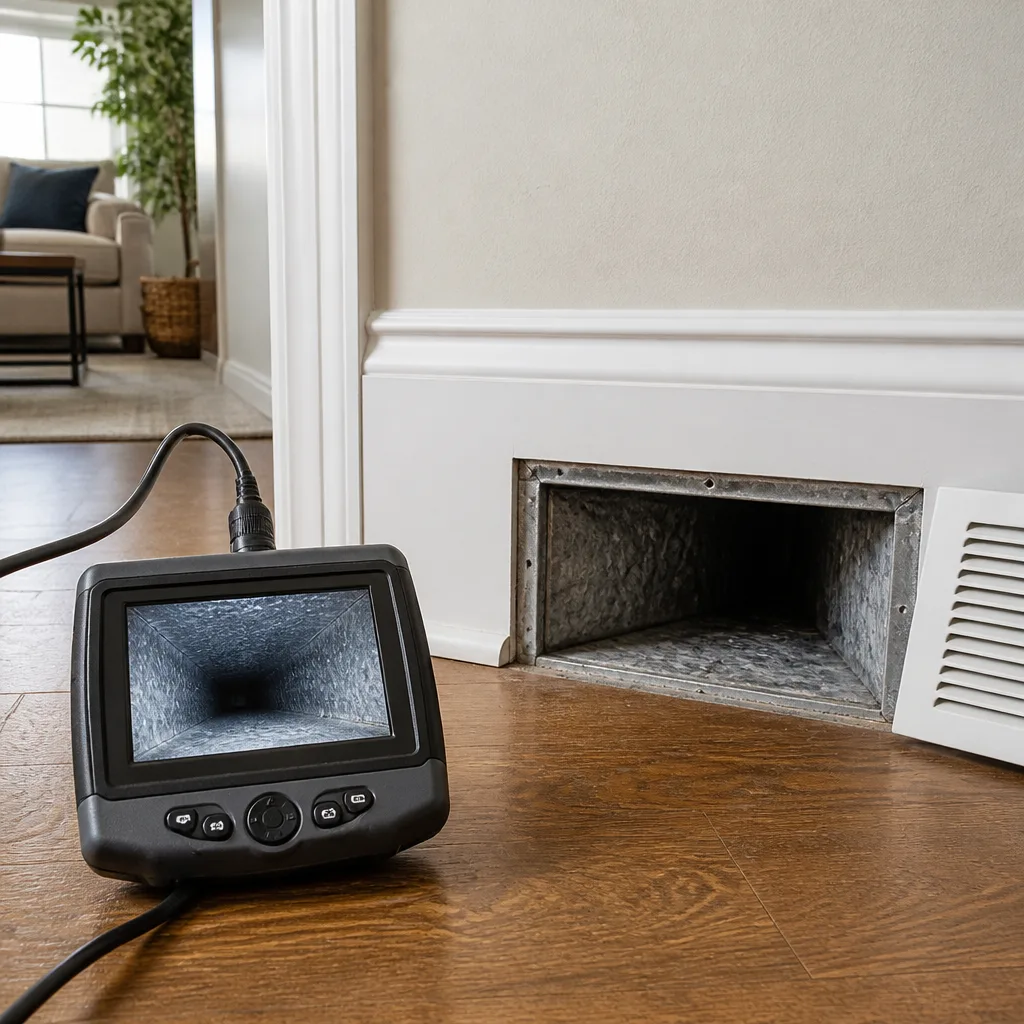 Camera inspection
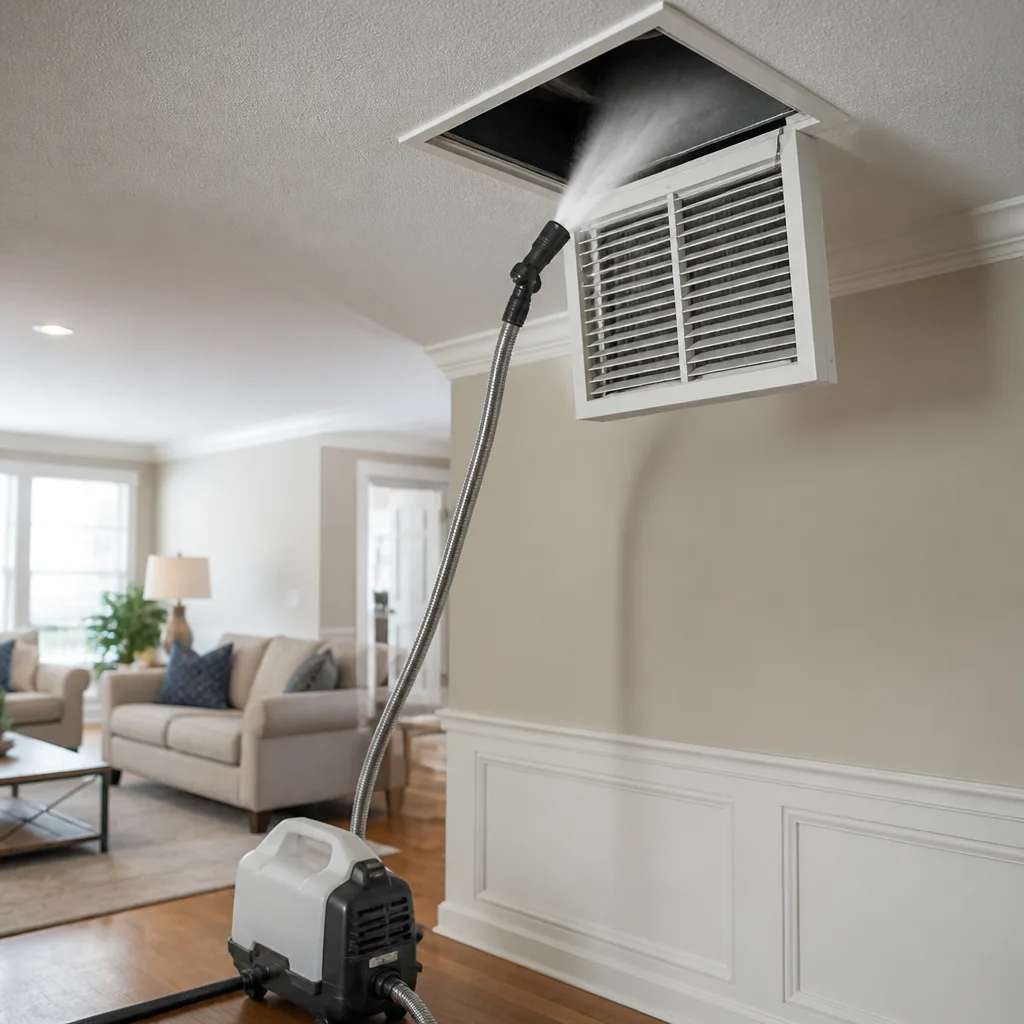 Sanitizing & deodorizing
Whole-system duct and dryer vent check with before-and-after photos - you see exactly what came out of your vents
That "$99 whole-house special" is a bait ad - the real number appears once they are in your hallway, or the "clean" is a shop-vac at the register. We photograph the inside of your ducts before and after instead.
The Complete Guide to Air Duct Cleaning in Spokane Valley
Most homeowners in Spokane Valley treat duct cleaning like a spring cleaning item – something you get around to once, then forget. That’s the wrong mental model for this valley. Between wildfire smoke that settles in for weeks at a time, cold-air inversions that trap whatever is in the air, and a housing stock where a large share of homes went up before 1990, your duct system is closer to respiratory infrastructure than to a chimney that needs sweeping. In this guide, we’ll walk through how Spokane Valley’s particular climate loads your ducts, why older Valley homes need an inspection before anyone touches a vacuum, what “negative pressure” extraction actually does, and how to tell whether the work you paid for was really done.
Quick Answer
Air duct cleaning in Spokane Valley removes accumulated dust, debris, and fine particulate from your ductwork using professional-grade negative-pressure extraction, and it’s worth doing when you can see contamination, notice airflow problems, or when smoke season has pushed particulate into the system. In this valley, the national “clean every few years” guideline undersells how fast ducts load up during a bad wildfire year, and homes built before 1990 often need an inspection and possible duct repair before cleaning even makes sense. One flat price per system, agreed before work starts, is the fair way to buy it.
Styles & brands we work with
- Whole-home duct cleaning
- Dryer vent cleaning
- Camera inspection
- Sanitizing & deodorizing
Table of Contents
- Why Spokane Valley Ducts Take a Harder Beating Than the National Average
- What Older Spokane Valley Homes Hide in Their Ducts
- How Negative Pressure Extraction Actually Works (And Why It Beats a Shop Vac)
- What Air Duct Cleaning Costs in Spokane Valley
- Cleaning Visit vs. Full System Assessment: Which Do You Need?
- How to Read a Post-Cleaning Report and Verify the Work
- How Often Should Spokane Valley Homes Clean Their Ducts?
- The Duct Most Spokane Valley Homeowners Forget: The Dryer Vent
Why Spokane Valley Ducts Take a Harder Beating Than the National Average
Most duct cleaning guides are written as if every home sits in a mild, humid climate with a three-year-old HVAC system. That’s not Spokane Valley. This valley sees wildfire smoke seasons that push fine particulate into homes for weeks, and cold-weather inversions that hold stale air against the valley floor. Both of those load the inside of your ducts with the kind of fine ash and dust that a standard filter was never designed to stop completely.
Here’s the mechanical reality. When smoke hangs in the air for days, your HVAC system is pulling that air through the return ducts continuously. A pleated filter catches a lot of it, but fine particulate – the stuff small enough to stay airborne – passes through and settles on duct walls, at the bottom of vertical runs, and inside the boots where ductwork meets the register. Over one smoke season that’s unremarkable. Over several, it builds a settled layer that gets stirred back into the air every time the system kicks on.
That’s the central point of this whole guide. Duct cleaning in Spokane Valley isn’t a cosmetic spring-cleaning item. It’s a mechanical response to a specific local climate pattern. The national “every three to five years” cleaning interval assumes air that’s reasonably clean to begin with. In a valley that spends part of every summer under smoke, and part of every winter under inversion, that interval is optimistic.
If you want the service basics without the deep context, our air duct cleaning page covers what’s included in a standard visit. This guide is the longer explanation – why it matters here, and how to do it right.
What Older Spokane Valley Homes Hide in Their Ducts
Spokane Valley grew a lot in the decades after World War II, and a large share of the housing stock along the Valley corridor was built before 1990. That matters for duct cleaning, because the duct systems in those homes are often a patchwork – original metal trunk lines, later flex duct retrofits feeding individual rooms, and boots that were never properly sealed to the floor or wall. None of that is a defect you can see from the living room. You find it on inspection.
Here’s what we look for before any cleaning starts in an older Spokane Valley home:
- Flex duct laid over metal. A common retrofit – someone ran flexible duct inside or alongside the original rigid trunk. The flex can sag, kink, or trap debris at the transition. Cleaning it the way you’d clean a metal duct can damage the inner liner.
- Unsealed boots. Where the duct meets the register, gaps let attic or crawlspace air get pulled into the system. That’s a contamination source cleaning alone won’t fix. It needs to be sealed.
- Disconnected or crushed runs. A run that came loose in the attic is blowing conditioned air into the attic, not the room. The room is cold. The duct is dirty. Cleaning without reconnecting just cleans the wrong end.
- Original sheet metal with years of settled debris. Solid and cleanable, but it needs mechanical agitation, not just suction. Debris that has bonded to the walls doesn’t come off with airflow alone.
This is why we don’t treat cleaning and repair as separate businesses. If an inspection turns up a disconnected run or an unsealed boot, the honest answer is to fix it – otherwise you’ve paid to clean a system that will pull the same contamination back in within a season. Lockhart works with professional-grade Rotobrush and Nikro systems, which we’ll get into next, and we offer air duct repair as a dedicated service specifically because so many Spokane Valley homes need the structural fix, not just the cleaning.
How Negative Pressure Extraction Actually Works (And Why It Beats a Shop Vac)
“Negative pressure” is the phrase every duct cleaning company uses, and almost none of them explain. It’s worth understanding, because it’s the single biggest difference between a real cleaning and a surface wipe-down.
Here’s the mechanic. A truck-mounted or high-capacity extraction unit connects to the duct system at a single large opening and pulls a strong, steady vacuum through the whole system. That vacuum creates negative pressure – the air pressure inside the ducts drops below the pressure in the rooms – which means air is constantly being drawn into the ducts and out to the collection unit. Simultaneously, a technician works through each supply and return with an agitation tool, loosening bonded debris from the walls. The loosened debris gets caught in the constant inward airflow and pulled out, rather than settling back onto the floor or blowing into the room.
Compare that to a portable shop-vac rig. A shop vac pulls a fraction of the air volume, and it doesn’t create meaningful negative pressure across the whole system – it only pulls at the point of contact. Debris you agitate one foot away from the nozzle doesn’t go anywhere. It settles. Or it gets blown into the room. A low-bid contractor with a shop vac and a brush is, honestly, moving dust around.
This is the phrase we keep coming back to: professional-grade equipment, residential pricing. The tools commercial contractors rely on – Rotobrush and Nikro among them – are what actually remove the contamination. The right machine and the right technician are what make the visit worth paying for.
- Containment. Registers are covered, the extraction connection is sealed, and the system is set up so loosened debris can only go one direction: out.
- Negative pressure established. The extraction unit runs continuously, holding the whole system under vacuum while work proceeds.
- Mechanical agitation, run by run. Each supply and return is worked with a rotating brush or air whip, sized to the duct type. Flex gets gentler treatment than rigid metal.
- Extraction. Loosened material travels out through the main line to the collection unit. It doesn’t recirculate.
- Verification and photos. Before-and-after photos of your ducts, taken during the visit, are the honest proof of what was actually removed.
What Air Duct Cleaning Costs in Spokane Valley
Air duct cleaning in Spokane Valley is priced per system, not per vent, and the fair way to buy it is one flat price agreed in writing before any work starts. That structure is the whole answer to the industry’s bait-and-switch reputation – the low coupon price that turns into a much larger invoice once the van is in the driveway.
What you should expect: a written estimate based on the size of the system, the number of runs, accessibility, and whether the inspection turns up repair work. Ask for that number in writing before you schedule. If a company quotes you a per-vent price, that’s a red flag – it’s how a “cheap” cleaning becomes expensive once every vent is counted.
We’ll be honest about what moves the estimate up or down in this market:
- System size and number of runs. A single-story home with a compact trunk line is a different job than a two-story with multiple zones and long attic runs.
- Duct type. Rigid metal is straightforward. Flex duct needs gentler methods and more time. A mix of both – common in pre-1990 Spokane Valley homes – takes longer than either alone.
- Accessibility. Ducts buried in a tight crawlspace or a low attic take more time to reach and protect than ducts with clear access.
- Condition discovered on inspection. A disconnected run, crushed flex, or unsealed boot adds repair time. Better to know that from the estimate than from the invoice.
- Dryer vent cleaning. A separate service, priced separately, and worth asking about on the same visit.
Why are some quotes so much cheaper? Usually because something is missing – the negative pressure equipment, the agitation tools, the inspection, or the repair. A quote that’s a fraction of the others is a quote for a fraction of the work. Call (844) 352-9945 for an exact quote on your system – estimates are free, and the written estimate sets the final price. No per-vent surprises.
Cleaning Visit vs. Full System Assessment: Which Do You Need?
This is the distinction most homeowners never hear, and it’s the one that determines whether the money you spend actually improves your air. A cleaning visit removes debris. A full system assessment asks whether the duct system is doing its job in the first place – and if it isn’t, cleaning alone won’t help.
When a cleaning visit is the right call
You can see visible dust or debris at the registers, the system has never been cleaned and you’ve owned the home for years, or you’ve just finished a remodel that generated fine dust. The ducts are structurally sound. You want them cleaned. A standard cleaning visit with proper extraction and agitation does exactly that.
When you need a full assessment
You’ve noticed uneven airflow – one room never warms up. You hear a rattle or whistle when the system runs. Your energy bills have crept up without a rate change. You live in an older Spokane Valley home and don’t know the duct layout. Or a previous cleaning didn’t seem to change anything. In any of those cases, cleaning before inspection is backwards. The assessment identifies whether the system has leaks, disconnections, crushed sections, or undersized runs – and the fix for any of those is repair, not more cleaning.
Here’s the practical version:
- Inspect first. Camera, airflow, and a look at the accessible runs. Find the problems before touching anything.
- Repair what’s broken. Reconnect, reseal, replace flex as needed. Air duct repair comes before cleaning, not after.
- Clean the whole system. Negative pressure extraction with mechanical agitation, run by run.
- Upgrade the filter or add purification if it fits. This is where product lines like Honeywell, Aprilaire, or Guardsman filters make a difference – matched to the system, not bought off a shelf.
- Verify. Before-and-after photos, plus a walkthrough of what was found and fixed.
How to Read a Post-Cleaning Report and Verify the Work
A post-cleaning report should tell you what was actually done, not just that something was invoiced. Here’s what a real one includes – and what to ask for if it doesn’t.
- Before-and-after photos, of your ducts. Not stock photos, not a generic gallery. Your system, taken during your visit. This is the single most honest proof of the work.
- A count of what was cleaned. How many supply runs, how many returns, whether the main trunk was included.
- Condition notes. Anything found on inspection – a disconnected run, a crushed flex section, an unsealed boot – and what was done about it.
- Repair record. If any duct repair or resealing was done, it should appear in writing, with a note on what was corrected.
- Filter and product use. What filter was installed or recommended, and why.
If a company can’t show you before-and-after photos of your own system, treat that as a real question about what happened in your house. The industry’s reputation problem is built on invoices that never matched the work. Photos are the simplest fix. Ask for them up front – any professional who does the work should be happy to provide them.
How Often Should Spokane Valley Homes Clean Their Ducts?
For most Spokane Valley homes, a realistic cleaning interval is every few years during a normal stretch, and more often after a severe smoke season or a major remodel. The national “every three to five years” guideline is a reasonable starting point, but it doesn’t account for the way this valley’s air loads a duct system. A single bad wildfire year can push more fine particulate into your ducts than two or three ordinary years combined.
Some practical signs it’s time, regardless of the calendar:
- Visible dust or debris when you look into a register with a flashlight.
- Airflow that feels weaker at some registers than others.
- A musty or smoky smell when the system first kicks on.
- Excess dust settling on surfaces shortly after you’ve cleaned.
- A recent remodel, pest issue, or water event that could have introduced material into the ducts.
- A severe smoke season just passed.
If any of those are true, don’t wait for the interval. Call (844) 352-9945 for a free estimate. We answer 24/7. Fast dispatch from 7am to 7pm, Sunday through Friday.
The Duct Most Spokane Valley Homeowners Forget: The Dryer Vent
Your dryer vent is a duct too, and it’s the one most cleaning companies either ignore or treat as an add-on. It shouldn’t be. Lint buildup in a dryer vent is a documented residential fire risk, and it’s a separate system from your HVAC ducts – meaning a standard air duct cleaning visit doesn’t touch it unless you ask.
Here’s what happens. Every load of laundry sheds lint. Most of it gets caught by the dryer’s lint screen. The rest travels through the vent line. Over time it accumulates on the inside walls of the vent, and especially at the bends and at the exterior termination. A partially blocked vent slows drying, makes the dryer run hot, and in the worst case lets lint near the heating element become a fuel source.
What a proper dryer vent cleaning involves:
- Disconnect and inspect. The dryer is pulled out, the vent line is disconnected, and the run is inspected end to end.
- Clear the line. The vent is cleared with the correct tool for its length and number of bends, using professional extraction.
- Check the exterior termination. The outside vent should open freely and not be screened with fine mesh that traps lint.
- Reconnect and test. The line is reconnected, the dryer is tested, and you’re shown what came out.
If you haven’t had your dryer vent looked at in years, add it to the same visit. Our dryer vent cleaning page covers the details. One visit, clean, repair, and upgrade – that’s the model that makes sense for a Spokane Valley home.
Common Mistakes to Avoid
- Buying on the coupon price. A low headline price that becomes a much larger invoice once the van is in the driveway is the industry’s signature move. Ask for a written, flat, per-system estimate before you schedule, and treat any per-vent quote as a warning.
- Skipping the inspection. Cleaning a duct system you haven’t inspected is a guess. In older Spokane Valley homes, that guess is often wrong – there’s a disconnected run or an unsealed boot that cleaning won’t fix and will just get re-contaminated.
- Hiring a shop-vac crew. Portable rigs don’t create the negative pressure that actually extracts debris. Ask what equipment will be on site, and expect to hear professional-grade names like Rotobrush or Nikro, not a shop vac.
- Forgetting the dryer vent. It’s a separate system, a real fire risk, and most cleaners won’t touch it unless you ask. Book it on the same visit.
- Never asking for before-and-after photos. The photos of your own ducts are the one piece of evidence that settles whether the work was done. Ask for them up front and expect them without a fight.
- Assuming a new filter solves everything. A quality filter – something in the Honeywell, Aprilaire, or Guardsman range, matched to your system – helps a lot. It doesn’t clean settled debris out of an already-loaded system.
- Waiting for the calendar instead of the signs. In a bad smoke year, the interval shrinks. If the registers are visibly dusty or the system smells smoky when it starts, that’s your signal, not the three-year mark.
See the difference
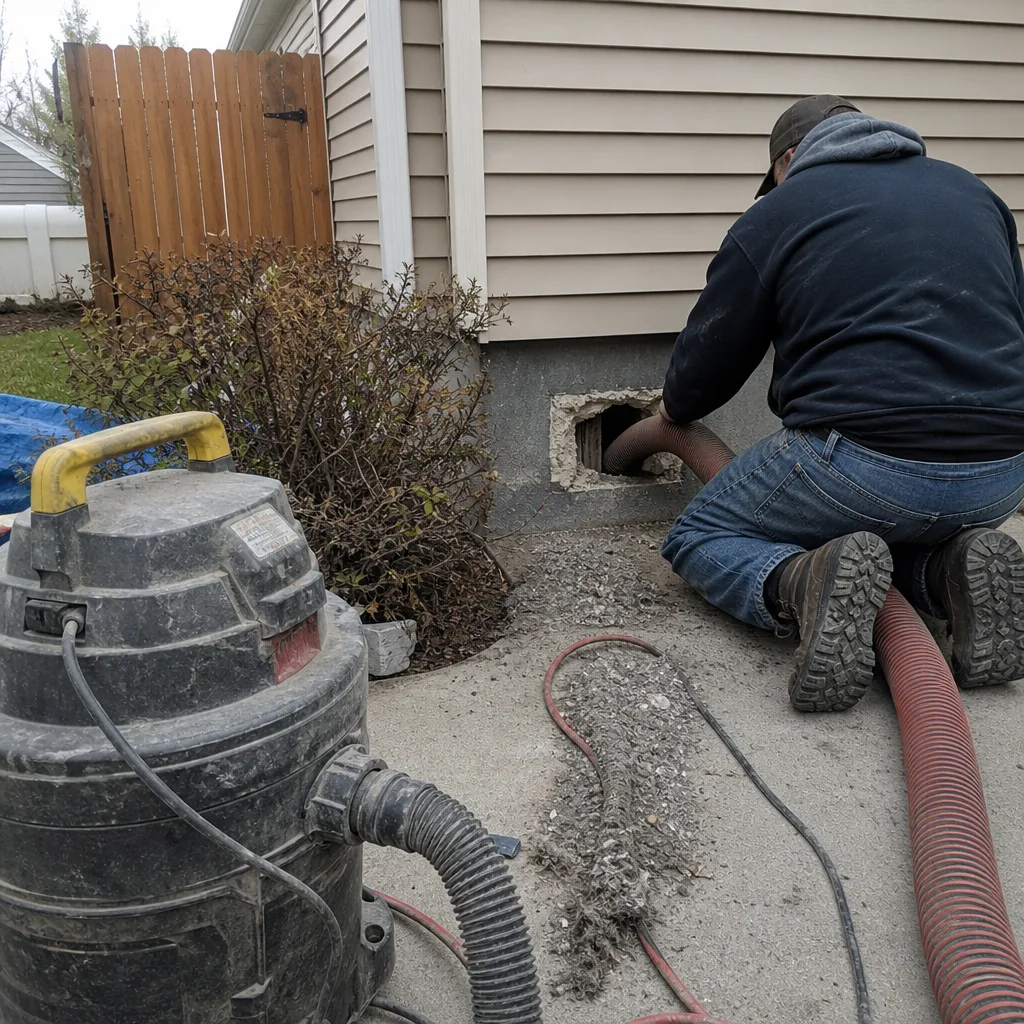 Before
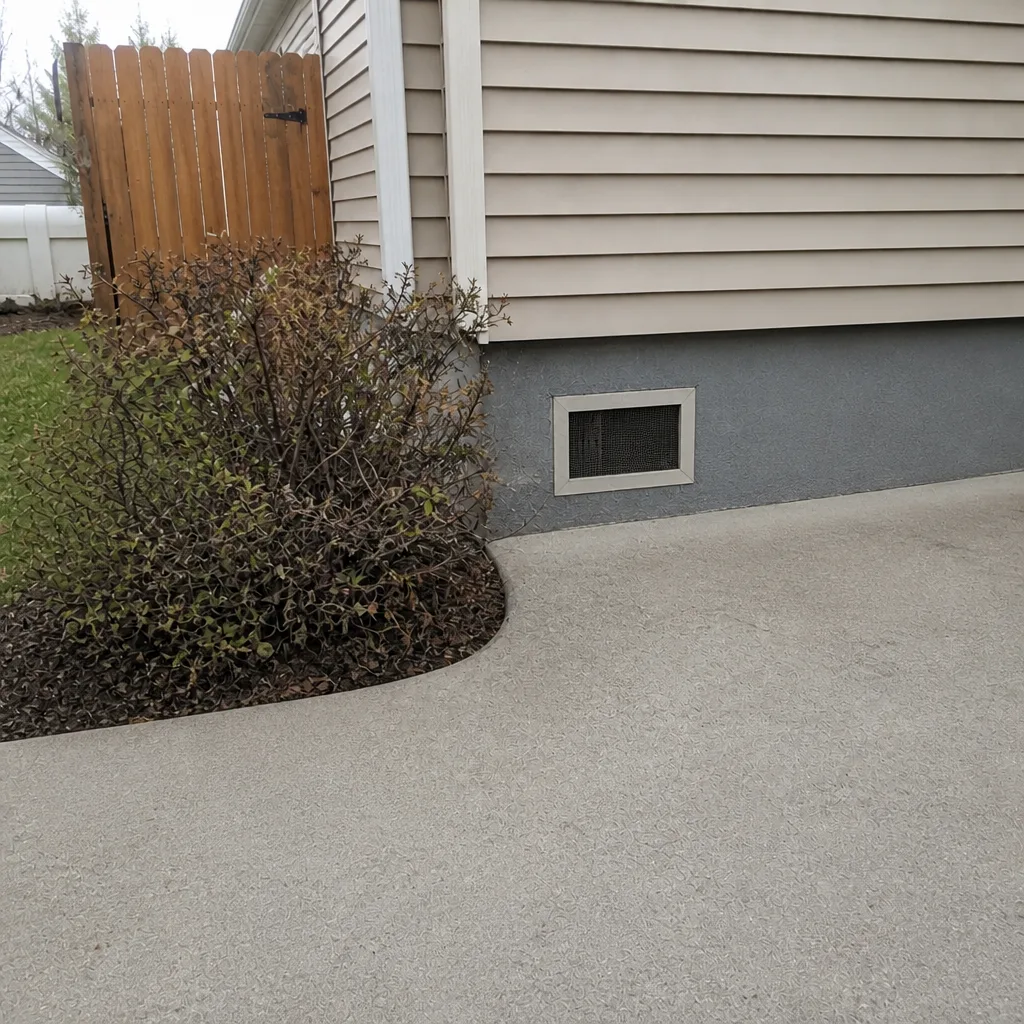 After
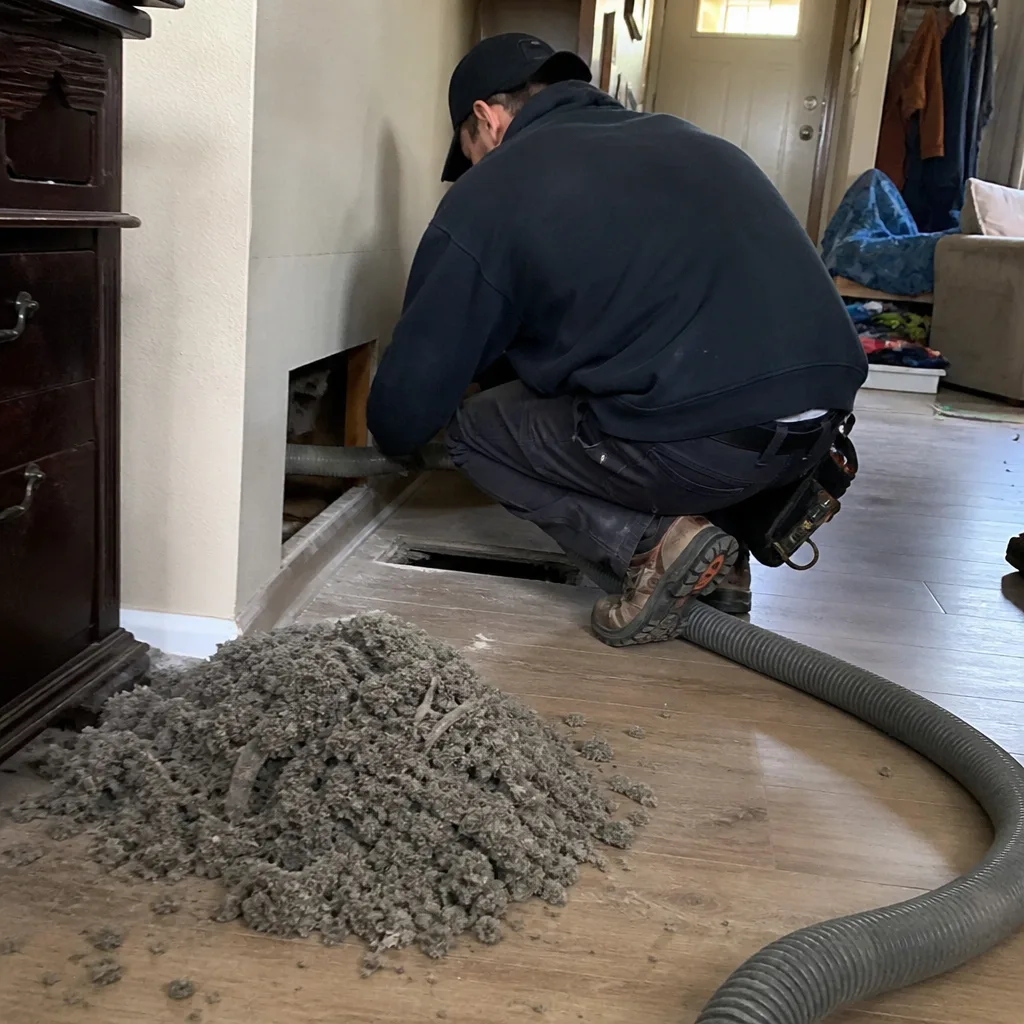 Before
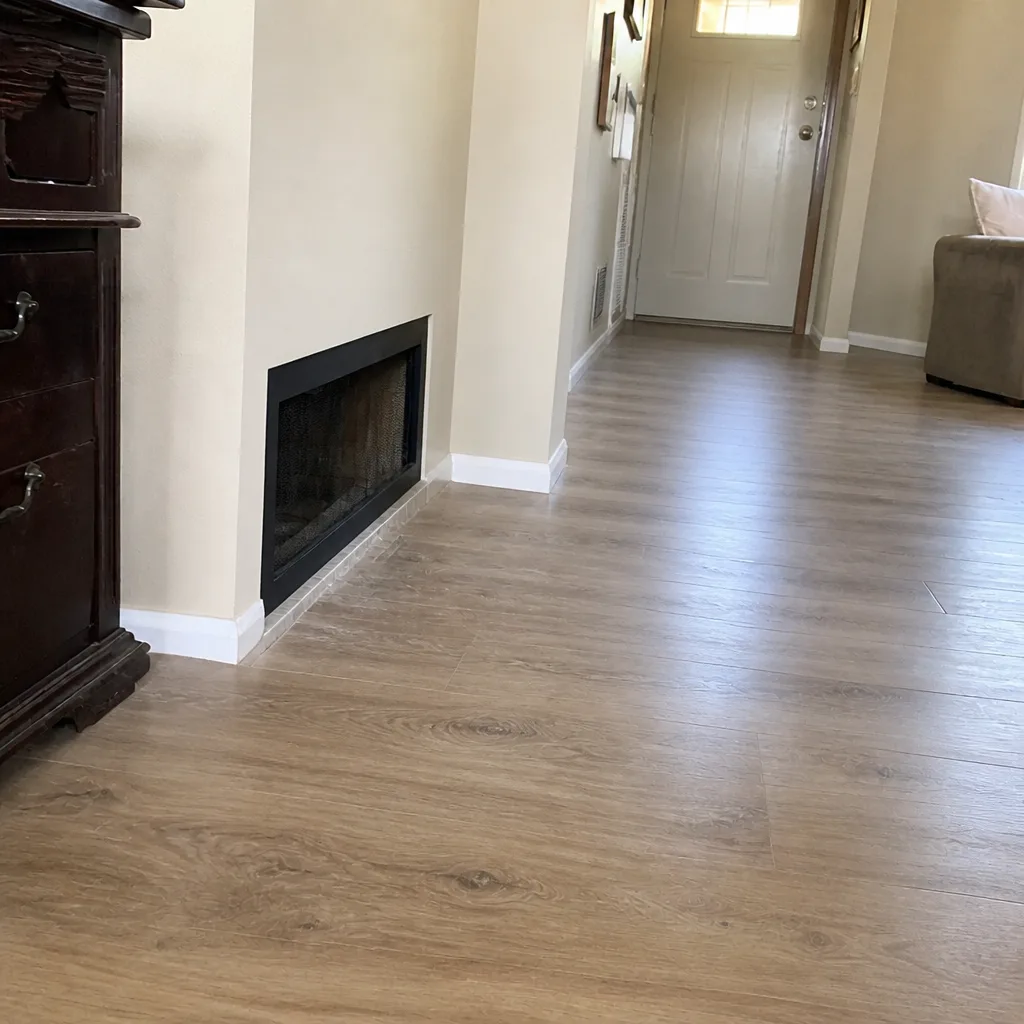 After
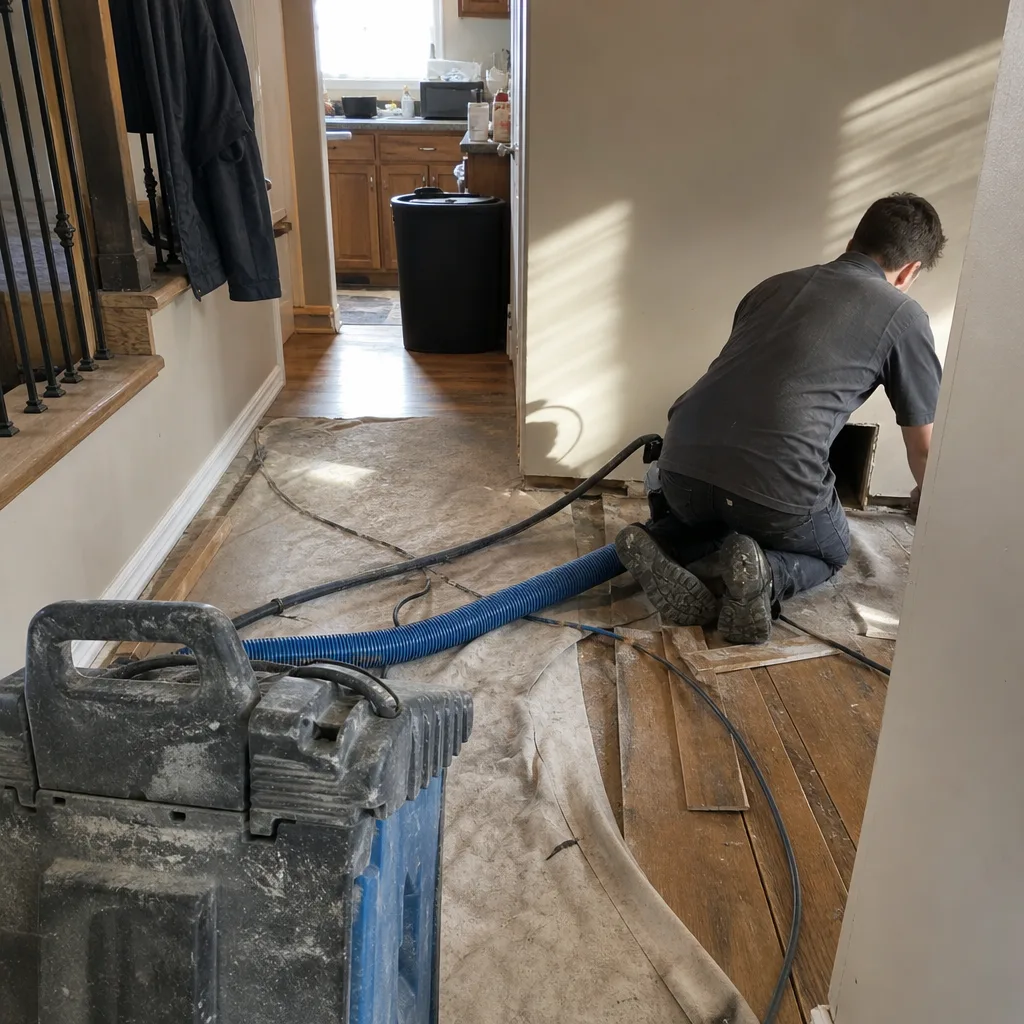 Before
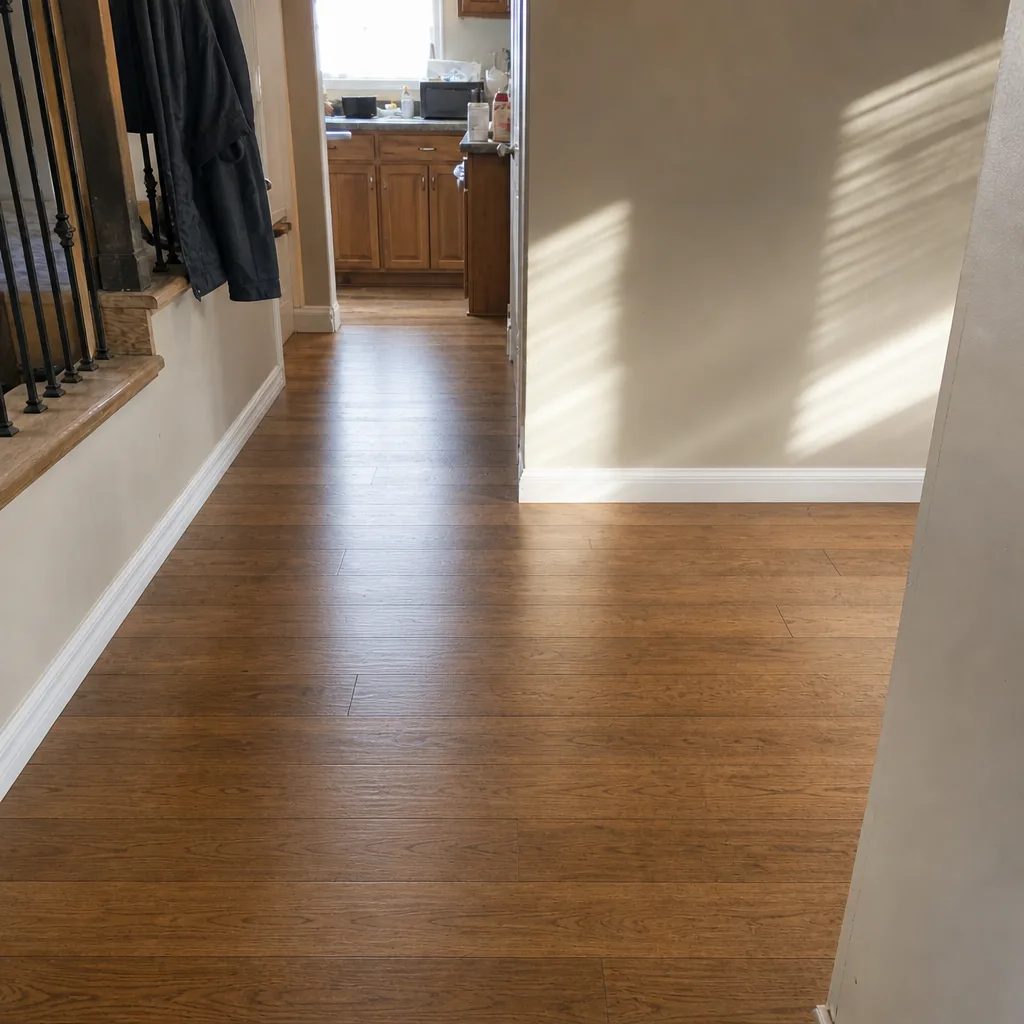 After
When to Call a Professional
Call a professional when you can see contamination at the registers, when airflow is uneven or weak, when the system first kicks on and you smell smoke or mustiness, or when you’ve just finished a remodel. Call when you’re not sure what you’re looking at – an inspection is free, and it settles the question. And call if you live in an older Spokane Valley home and have never had the ducts assessed, because the repairs in those systems are the part that actually restores airflow. We don’t just clean your ducts – we inspect and repair them. Lockhart Air Duct Cleaning offers free estimates in Spokane Valley – call (844) 352-9945. We answer 24/7. Fast dispatch from 7am to 7pm, Sunday through Friday.
Frequently Asked Questions
It’s priced per system, not per vent, and the fair way to buy it is one flat price agreed in writing before work starts. The exact number depends on system size, duct type, accessibility, and any repair found on inspection. Call (844) 352-9945 for an exact quote – estimates are free and the written estimate sets the final price.
Because something is missing – usually the negative-pressure extraction equipment, the mechanical agitation tools, or the inspection and repair. A quote that’s a fraction of the others is a quote for a fraction of the work. A shop vac and a brush doesn’t remove settled debris; it moves it around. Call (844) 352-9945 for an estimate that reflects the whole job.
Before-and-after photos of your own ducts, taken during the visit, plus a written report of what was cleaned and any repairs made. If a company can’t show you photos of your system, treat that as a real question. Ask for them up front – anyone doing the work properly should be happy to provide them.
Every few years in a normal stretch, more often after a bad wildfire season or a major remodel. This valley loads ducts faster than the national “every three to five years” guideline assumes. If the registers are visibly dusty or the system smells smoky when it starts, it’s time regardless of the calendar. Call (844) 352-9945 for a free estimate.
No. The dryer vent is a separate system and needs its own cleaning. It’s worth booking on the same visit since it’s a documented residential fire risk that most cleaning companies ignore. Ask specifically about it when you schedule. Lockhart offers dryer vent cleaning as a dedicated service.
A cleaning visit removes debris from a system that’s otherwise structurally sound. A full assessment checks whether the system is working at all – looking for disconnected runs, crushed flex, and unsealed boots. If airflow is uneven or a cleaning didn’t seem to change anything, you need the assessment. Our Spokane Valley service page covers what’s available on a single visit.
The Bottom Line
Air duct cleaning in Spokane Valley is a mechanical necessity, not a cosmetic one. Wildfire smoke and cold-weather inversions load duct systems faster than the national interval assumes, and older homes in the Valley corridor often need inspection and repair before cleaning makes sense. Buy it as a flat price per system, agreed in writing, with professional-grade extraction equipment and before-and-after photos of your own ducts. Treat the dryer vent as part of the same system. And when it’s time, call a company that inspects and repairs, not just cleans. Lockhart Air Duct Cleaning is here for the whole job – Lockhart Air Duct Cleaning is how you reach us. Call (844) 352-9945 for a free estimate. We answer 24/7. Fast dispatch from 7am to 7pm, Sunday through Friday.
Written by the team at Lockhart Air Duct Cleaning, serving Spokane Valley since 2016.